I am taking a brief break this weekend from putting a long piece out; back to that next weekend, because I’ll likely be further along in proving that Build vs Buy has really turned a corner, and I believe I am living proof of that.
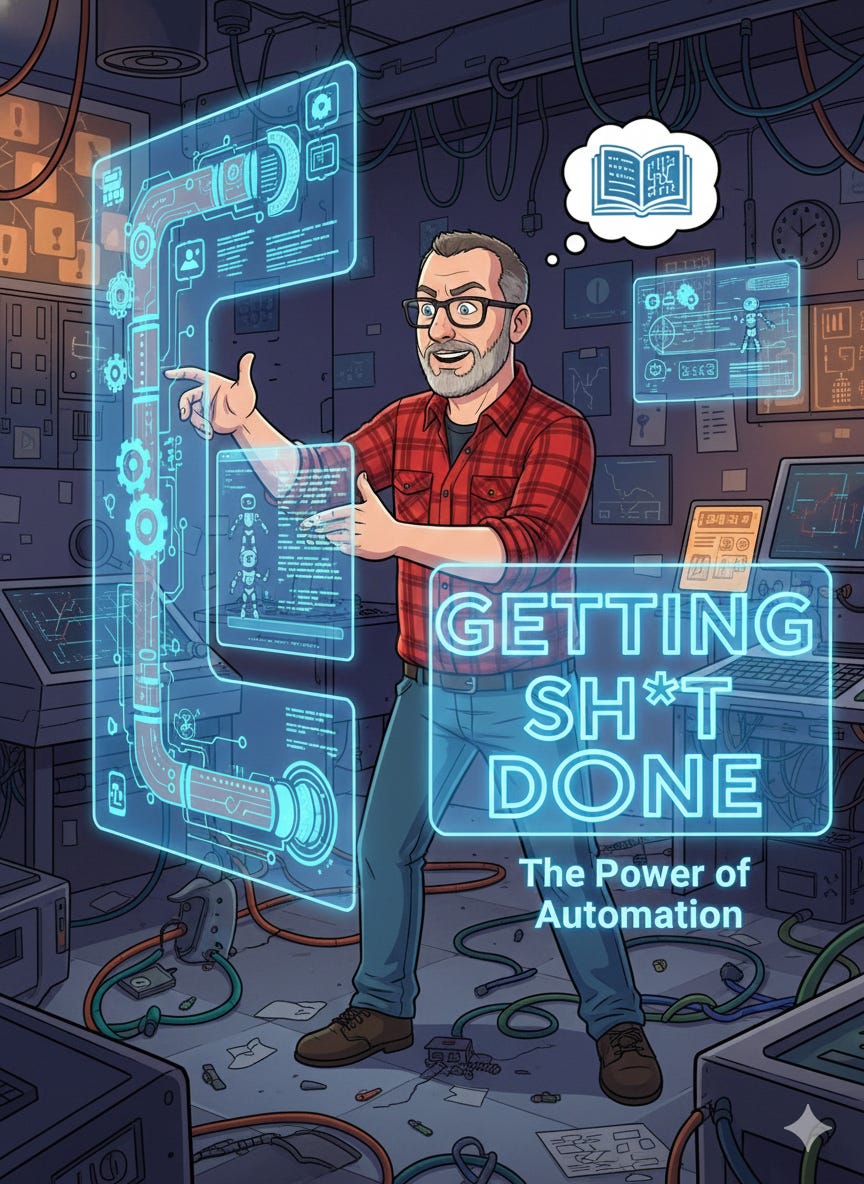
Getting things done at scale: How technology automation and CodeFlow are redefining efficiency in the modern tech stack.
Along with the million other ideas floating around in my head, and aside from the one of writing a book, there has been one long-standing idea: technology automation and the power it brings to Getting Shit Done.
I believe you should automate everything and anything you can; that is what computers were designed for, at the end of the day. If you tell me you can’t or shouldn’t automate something, I would ask whether you have tried. From modifying the Windows 3.1 “ini” files, IYKYK, to directly monitoring the Windows 9X registry using Regmon and Procmon to work out which registry entries needed to be changed to fully automate “bastard” applications in the Citrix domination days :-) A few of my mates and colleagues ended up working at Microsoft in Seattle because of the skills they had developed through hard-earned lessons down here in good old NZ.
We had Genesis Citrix Server Farm builds back in the day, which built everything they needed to run and “re-generate” when we needed to cycle a badly behaving one. It was always quicker to rebuild than troubleshoot the issue. Windows PC automation to reduce the 3-4 week delivery times for new devices to 2-3 days was the service's focus.
I have been doing this or advocating for it my whole career, from being one of the early adopters of scripting Windows 95 deployments for the Waikato District Council months after Windows 95 was released, working for ComputerLand in the Tron, to automating Cisco network infrastructure to save time, avoid boredom and stupid errors.
NZ Number 8 wire mentality lives strong in this one, you might say. All that I have to say is why I became enamoured by Low Code - No Code, like the discovery I had when I found OutSystems, that is a story for another day as well. Low Code - No Code emerged as a way to automate a whole lot of stuff that needed to be consistent so that great experiences could be built on top of that consistent delivery.
My vision is that what was once referred to as High Code and High Cost is no longer really the case. There are plenty of people saying that AI-assisted coding is great, but it also has overhead that you need to be careful of, of course it does, which fucking technology in the last 50 plus years hasn’t had that? Naysay all you want, you naysayers, or get curious and live a little.
Bringing shit to life since ages ago in the mind of a late diagnosed ADHD’er, and the power of AI is giving this old dog some nifty new tricks, I must say.
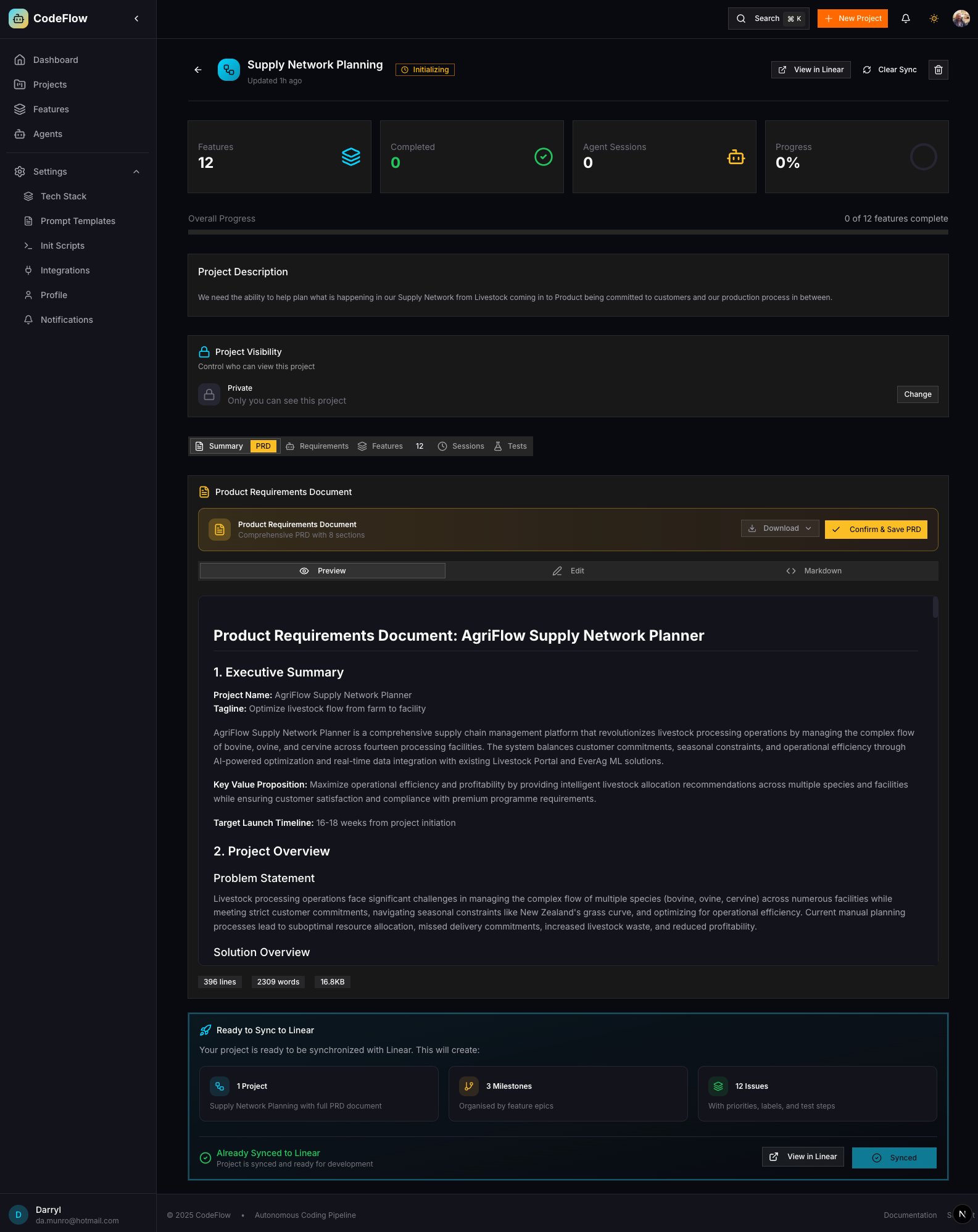
Project “CodeFlow” is coming to life in ways that, 12 short years ago, when I first cut a line of JavaScript, I never imagined. The following is the intro to my capture of what I am building…..inspired by my exploration of Spec Driven Development with GitHub SpecKit and now Anthropics Autonomous Coding Agent Quickstarter.
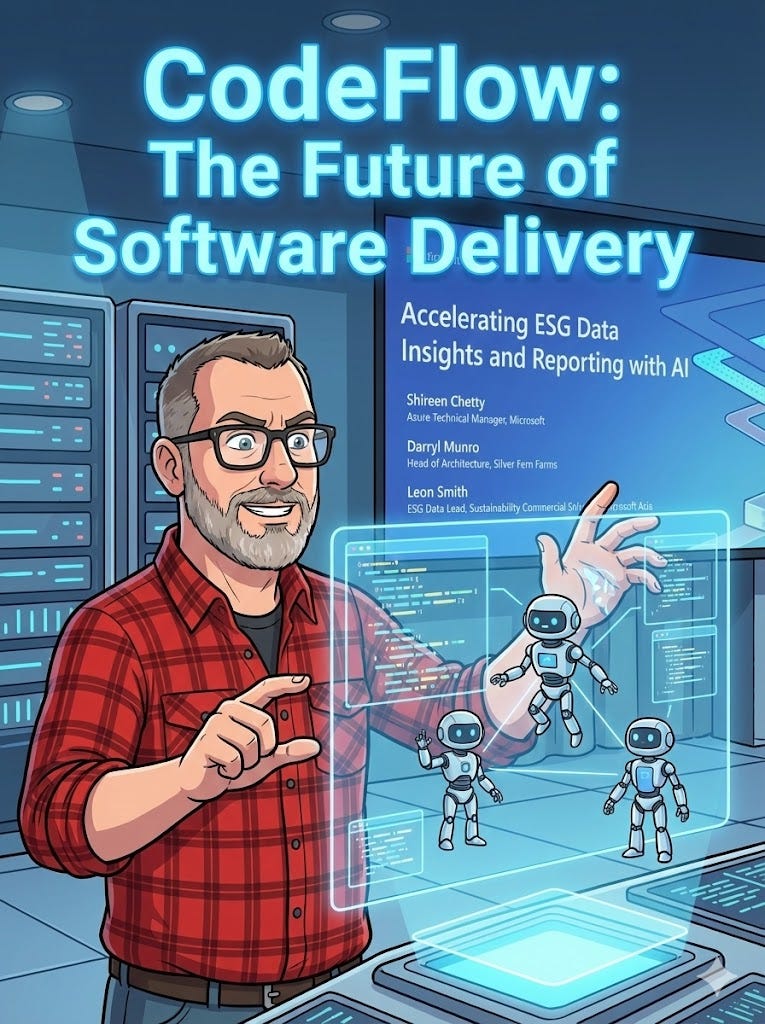
Visualising the next era of automation: CodeFlow’s AI autonomous agents transforming the software delivery lifecycle.
Overview
CodeFlow is a web-based application that transforms the autonomous coding experience from command-line tools into an intuitive, visual interface. By integrating AI-powered requirements gathering with Linear project management, CodeFlow enables teams to go from idea to implementation with unprecedented speed and clarity.
1.2 Problem Statement
Current autonomous coding pipelines suffer from several critical limitations:
Command-line interfaces create steep learning curves and limit adoption to technically advanced users
Disconnected workflows between requirements gathering, specification, and project tracking create friction and information loss
Lack of visibility into agent progress makes it difficult to understand, debug, or optimize autonomous development
Manual specification writing is time-consuming and often incomplete, leading to suboptimal agent performance
1.3 Proposed Solution
CodeFlow provides a unified web interface that guides users through the entire autonomous coding lifecycle: from conversational requirements gathering with Claude, through structured specification generation, to Linear-integrated project tracking and real-time agent monitoring.
That’s it for this week, longer than I thought, but more to come when I have this working end-to-end.