
When Grief Meets Hyperfocus: Building Through the Unbuildable
On Friday, I Learned My Mum Has Dementia. By 11:30pm, I’d Built a Working Prototype. Here’s What That Means.

Friday morning started like any other. I was logged in, working away from home, when the message came through: my mum’s got early-onset dementia.
The grief hit like a fucking truck.
I sat there, overcome with emotion, my day completely derailed. I took a half-day of sick leave because I genuinely couldn’t face being around people. The challenge? My wife was away. My usual support mechanisms weren’t there. I was alone with news I wasn’t equipped to process, sitting in an empty house with thoughts I couldn’t control.
What happened next is something I’m still trying to understand myself.
The Choice You Make When You’re Spiralling
I messaged my wife. She knows me well enough to recognise the patterns—the way my ADHD brain can take devastating news and spin it into catastrophic scenarios. Her response was gentle but straight: Don’t get into a tailspin. Don’t run through all the scenarios. Don’t let your mind tear itself apart with what-ifs.
That warning flipped something in me. I realised I had to do something to get myself past this moment. Not through it—I’m not delusional enough to think you can code your way through grief—but just... past the immediate paralysis of it.
So I did what my ADHD brain has always done when emotions become overwhelming: I found a problem to solve.

The Problem: When Livestock Supply Meets Brutal Complexity
For four years, I’ve been at an organisation that processes red meat—beef, sheep, venison. We’re New Zealand, which means we market ourselves on grass-fed, natural farming practices. We don’t use the giant feedlot approach of the US, where you can grow animals to order. We rely on the natural grass curve, good farming practices, and the unpredictable reality of what our farmers and shareholders can supply.
This creates a problem that’s haunted us for years: how do you optimise an inherently variable livestock supply into the specific product cuts that customers have contractually ordered?
It’s not simple butchery. There’s the notion of volume-oriented product—in beef, it’s called “trim” or “grind.” That’s all the edible product that isn’t your premium cuts. Large global customers require a consistent, constant feed of this trim product. But here’s the complexity: the decisions you make about trim have a direct impact on the amount of value-oriented cuts you get out of each animal.
You’re essentially trying to solve a multi-dimensional optimisation problem with:
Unpredictable supply (grass-fed doesn’t work on a schedule)
Contracted demand (customers need what they ordered, when they ordered it)
Yield variability (different cuts from the same carcass affect each other)
Processing constraints (which plants can handle what, and when)
Right now, we solve this with a heap of Excel spreadsheets and decades of tribal knowledge. The people who do this work are fucking brilliant—their intuition and passion for these problems is palpable. But it’s brutally manual, fragmented across multiple systems and external partners.
I’ve been thinking about this problem for years. Having conversations about it, seeing the gaps, and feeling that familiar itch that there’s a better way.
Friday afternoon, alone with my grief, I decided to build it.
Three Hours, Then Eight More: What Hyperfocus as Self-Medication Actually Looks Like
I’d spent some time earlier in the week working with Claude AI—just chatting through the problem, asking it to research how this gets solved elsewhere in the world. The statistical functions, the mathematical analysis, and the complexity of carcass breakdown and yield optimisation. It was like having an independent consultant help me quantify something I’d only understood intuitively.
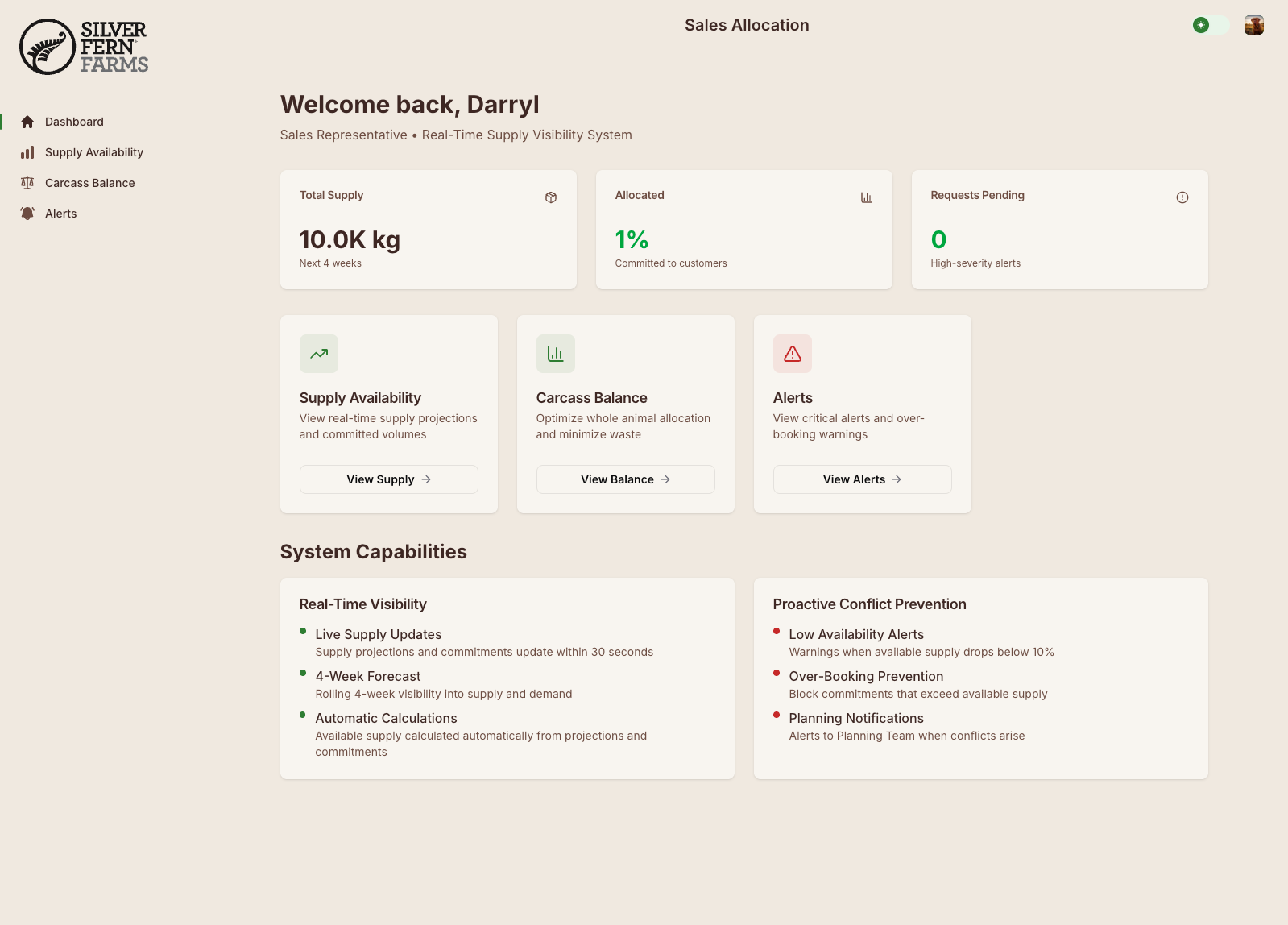
Friday afternoon, I opened Claude Code and started building.

For about three hours, I was utterly consumed. The livestock optimisation problem is intellectually demanding enough that there’s simply no room for other thoughts. No space for spiralling about my mum. No mental bandwidth for catastrophic scenarios about dementia progression. Just the problem, the code, the architecture taking shape.
Then I came up for air. I reached out to a couple of colleagues and checked in on how things were going. And the grief hit me again, harder this time. I sat with it for a while, let it wash over me.
Then I got straight back into building. From about 2:30 or 3:00 pm until 11:30 that night—eight more hours of solid coding. I haven’t stayed up that late in a long time. Ironically, I was still awake really early the next day, and talking to Claude AI to create this article, the creator workflow evolved….
Let me be clear about what was happening: I wasn’t thinking about my mum during those hours. The code completely took over. That’s hyperfocus. That’s what ADHD brains do when they find the right problem at the right moment.
Was it healthy? Was it a good coping mechanism? I honestly don’t fucking know yet.
What AI Changes: The Difference Between 2015 and 2025
Here’s what I know for sure: I couldn’t have done this even 18 months ago. Definitely not five years ago. Not ten years ago.
Before AI-assisted coding, I probably wouldn’t have even started. The gap between “I understand this problem deeply” and “I can build working software to address it” was too wide for my ADHD brain to bridge. I’ve never had the patience to sit and write JavaScript or TypeScript line by line. I understand software architecture reasonably well, but the tedious implementation? That’s always been where my interest dies.
Claude Code and AI-assisted coding techniques change that entirely. They bring what I can only describe as a potent weapon to how I think about problems. I can work through complex architecture, explain what I need like I’m talking to an independent consultant, and then watch as the code materialises at the speed my brain operates.

I’m not just vibing code into existence, either. I’m using proper approaches—GitHub SpecKit, being really clear about features and interactions, building with guardrails that ensure the output is production-quality. This isn’t a throwaway prototype. This is code that could go live, built at a pace we couldn’t have imagined six months ago.
AI doesn’t give me patience. It gives me pace. And when your brain is trying to outrun grief through problem-solving, pace is everything.
The Leadership Paradox: What I’m Actually Proving
Here’s where it gets complicated.
I took sick leave on Friday to process devastating news about my mum. But within hours, I was building a prototype to prove that my organisation could solve a complex optimisation problem internally, rather than relying on external partners and fragmented systems.
Three hours of coding. Grief hits. Process it. Then eight more hours straight through until nearly midnight.
By Sunday, I’m still building because I’ve made statements at work that our ability to deliver this stuff is sitting right in front of us. The power of the tools. The data we have. The deep institutional knowledge that’s available through people who’ve been here for decades. Their passion for what we do as an organisation.
As a leader, I have a responsibility to help people see what’s possible when we get out of the way and let people solve problems. To show that we can trust ourselves as an organisation. To demonstrate that these AI tools are democratising the ability to build production-ready systems in ways we couldn’t have dreamed of recently.
But there’s a risk here, isn’t there? If I, as Head of Architecture, can build this in one grief-driven day, does that set an impossible standard?
I don’t think so. Because the point isn’t “look what I can do.” The fact is, “look what we can do with the right tools and trust.” This isn’t about my hyperfocus superpower. It’s about showing that we have the capabilities to make the impossible routine.
Still, I’m aware of the paradox. I’m using my worst day to demonstrate our best potential.
The Self-Awareness That Came at 52
I don’t think I could always recognise what my brain needs in these moments. Before my ADHD diagnosis at 52, I didn’t have the framework to understand my responses to overwhelming situations.
I’ve always had reasonably good emotional intelligence, but that wasn’t related to ADHD specifically. What’s emerging now—what’s still developing—is self-awareness about my neurodivergent patterns. We can’t use our ADHD as an excuse; we can use it to help explain certain things we do, or at least the why behind it, but never use it as an excuse for being a Tuesday…
Friday afternoon was a bit reactive at first. “I need to do something or I’m going to spiral.” But once I realised what the coding was doing for me, it became more directed. More intentional. I could use this to keep me from overthinking, from running every terrible scenario, from drowning in catastrophic thinking.
I was, as I’ve come to think of it, marshalling my situation. Being the marshal of your response to the world is a skill I’m still learning. I can’t say I’ve earned the stripes to do this well yet. But self-awareness is growing.
The Practical Reality: Grief Doesn’t Wait, But Neither Does the Housework
Let me ground this in something concrete: my wife is away this weekend. Which means the time is theoretically my own. Which means I could spend 20 hours coding through my grief without anyone noticing.
But I can’t because I have responsibilities. The housework still needs doing. I can’t let my wife come home to a shitstorm of mess—that wouldn’t be responsible or show much love and respect for her. I can tell you I don’t always get this right either; in fact, I know I get it less right than I should —old dog, new manual, new tricks. Work. In. Progress.
This is the practical wisdom I’d offer anyone reading this who recognises themselves in this pattern:
Use hyperfocus with awareness. Yes, diving into a complex problem can be productive self-medication. It’s certainly better than drinking, smoking, or other destructive behaviours. But it’s still self-medication, not healing.
Take the sick leave. If you couldn’t function in meetings (and I absolutely couldn’t on Friday), then it’s appropriate to take time out. Don’t try to push through.
Know your support systems aren’t optional. I’m fortunate that my wife was only a message away, even if she wasn’t physically here. Without that check-in, without her warning about spiralling, I might have gone to much darker places.
Build something if you need to, but know what you’re doing. I wasn’t healing on Friday night. I was coping. There’s a difference. The grief is still here. It’ll still be here tomorrow. The code gave me a few hours of peace from the chaos, but it didn’t resolve anything about my mum’s diagnosis.
Be honest about the context. I could do this because my wife was away. If she’d been home and I’d disappeared for 11 hours to code, that would have been a different problem entirely—context matters. Circumstances matter. What works in one situation might be destructive in another.
What This Really Means: Creativity From Crisis
This article is really about how creativity and problem-solving can come from anywhere, at any moment, driven by any situation you’re in. Your response to that situation matters.
Developing self-awareness around these responses—so you can channel them productively rather than destructively—is a potent skill to learn. So is taking time to know what’s right in your own response to the world.
I’d advocate doing this in a productive way, not at the expense of everything else and recognising when you’re in a situation where you have space to hyperfocus, versus when you need to be present for other people and other responsibilities.
For me, Friday was a convergence of several things:
Devastating news that triggered intense grief
Being alone with my thoughts and no immediate distractions
A complex, meaningful problem I’d been circling for months
AI tools that could match the pace my ADHD brain needed
Just enough self-awareness (newly developed at 52) to recognise what I was doing and why
The result? By Sunday, I will have a working prototype that demonstrates what our organisation is capable of. Built during the worst weekend I’ve had in years.
I’m not celebrating this. I’m not condemning it either. I’m examining it. Because this intersection of ADHD hyperfocus, grief, and AI-enabled problem-solving is something we’ll see more of, not less. As these tools become more accessible, more people will discover they can channel intense emotions into creative work at unprecedented speed.
The question is: will we develop the self-awareness to do it intentionally? Will we build the support systems to ensure it doesn’t become destructive? Will we recognise the difference between coping and healing?
I don’t have those answers yet. I’m still sitting with my mum’s diagnosis and still processing what it means for her, for my sister, for her husband, for all of us—still figuring out how to support them from the other end of the country.
But I also have a working prototype that could change how we approach one of our most complex challenges—built in the space between grief and action. Between breaking down and building up.
That’s the reality of an ADHD brain in 2025, with AI tools that match its pace and a lifetime of technical skills finally finding the right problem at the right moment—even if that moment is absolutely the wrong time for it.
I’m still learning to be the marshal of my situation and still developing the self-awareness to know when hyperfocus is helping and when it’s just delaying the inevitable reckoning with difficult emotions.
But I’m learning. And maybe that’s the most I can ask of myself right now.
If you’re someone who recognises yourself in this pattern—the ADHD brain, the tendency to dive into problems when emotions overwhelm, the hyperfocus as self-medication—I’d love to hear from you. Not because I have answers, but because I’m still figuring this out too. And maybe that’s something we do better together than alone.